Attività di Pasqua per pazienti con Alzheimer
by
Romina Sarcletti
Practical ideas and advice for carers
Easter is a special time of year, full of traditions, colours and togetherness. For a carer, it can also be a valuable opportunity to organise Easter activities for older people with Alzheimer’s, designed to stimulate memory, improve mood and strengthen emotional bonds.
In this article, you will find practical suggestions and simple activities for people with Alzheimer’s, designed to be adaptable to different stages of the disease.
Why organise Easter activities with our loved ones with Alzheimer’s
The activities we suggest for the Easter period are not just a way to pass the time, but also a way to celebrate, and they represent a genuine tool for cognitive stimulation and well-being.
Among the main benefits:
- They trigger memories linked to traditions
- They encourage emotional engagement
- They stimulate the senses (sight, smell, touch)
- They reduce agitation and apathy
Activities for older people with Alzheimer’s should be simple, reassuring and repetitive to avoid frustration. It can be helpful to look back on the past together and make notes on the ways in which the person with the condition used to love celebrating Easter
1. Creative Easter activities
Hands-on activities are perfect for engaging people with dementia.
- Decorating eggs with paints or stickers
- Colouring Easter-themed pictures
- Making small crafts with paper, fabric or salt dough
- Using children’s Easter-themed cross-stitch kits
These simple Easter activities, suitable even for older adults, help maintain fine motor skills and foster a sense of satisfaction.
2.Simple, traditional cooking
Cooking is among the best activities for older adults with Alzheimer’s, especially when linked to traditional recipes.
Recommended activities:
- Baking Easter biscuits
- Decorating cakes
- Mixing ingredients
Smells and flavours can trigger deep memories, making these activities particularly effective.
3.Music and memories
Music is a powerful tool for stimulating memory.
What to do:
- Listen to Easter carols or songs from their youth, if preferred
- Sing together
- Clap hands to the beat
This activity helps improve mood and reduce anxiety.
4.Outdoor activities
With spring, the outdoors also becomes an important resource.
Outdoor Easter activities for older people:
- Walks in the garden
- Nature observation
- A simplified egg hunt
Contact with nature promotes relaxation and sensory stimulation.
5.Reminiscence and traditions
Among the most effective activities for older people with Alzheimer’s is reminiscing.
Ideas:
- Looking at photos
- Talking about family traditions
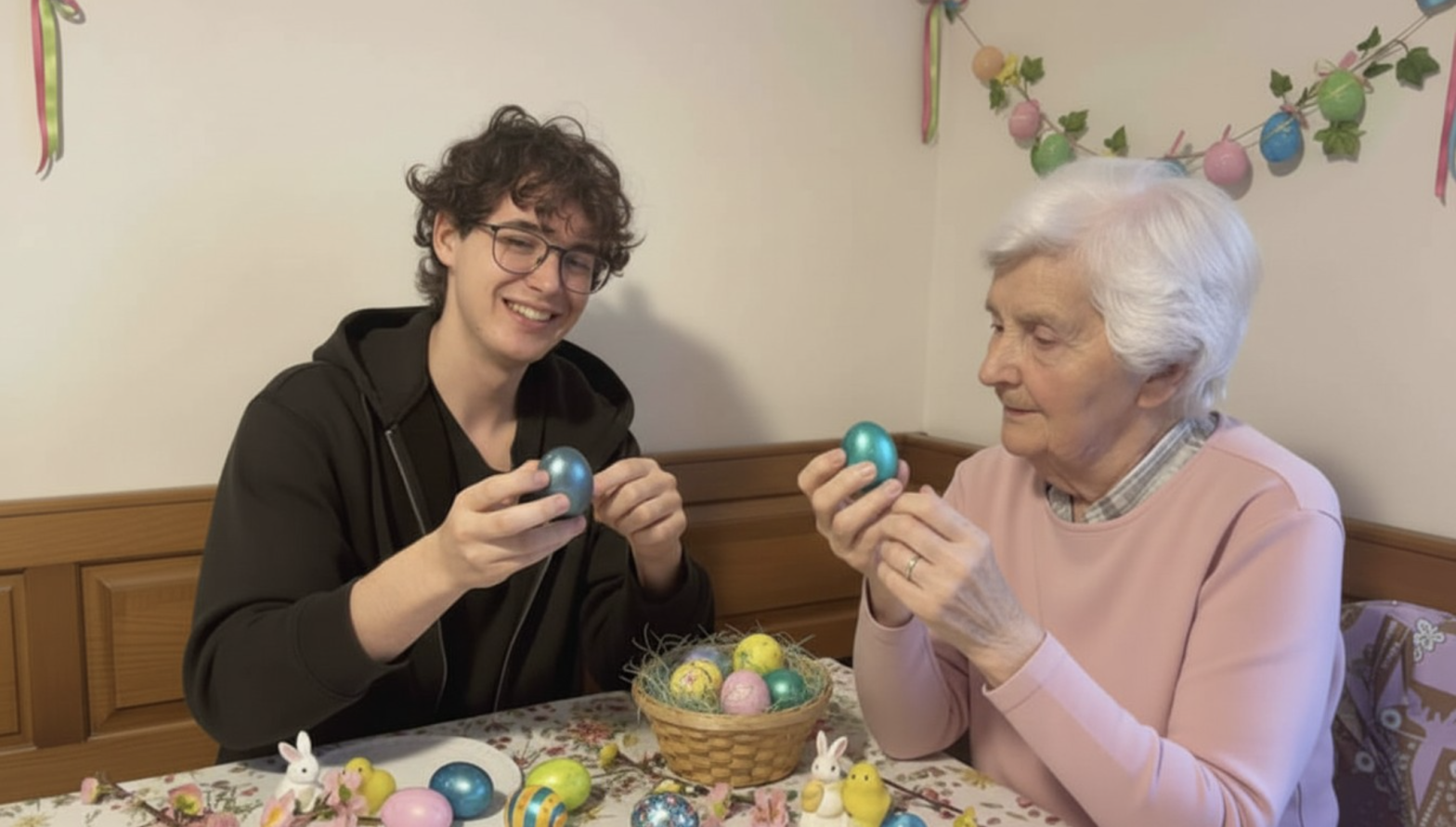
- Involving them in an egg-tapping game
- Talking about past celebrations
It is important not to correct any mistakes, but to value the emotional experience.
Practical tips for carers
To make Easter activities for people with Alzheimer’s effective:
- Use simple, reassuring language
- Avoid activities that are too long or complex
- Maintain a calm environment
- Adapt each activity to the person’s abilities
- Encourage without forcing
The carer’s role is fundamental in creating a peaceful and inclusive atmosphere.
Conclusion
Easter activities for those with Alzheimer’s can become moments of genuine connection and well-being. There is no need for complex programmes: small, thoughtfully devised ideas are enough to make a difference.
Through simple and meaningful activities, even a festive day can become an opportunity to stimulate memory, strengthen bonds and bring peace of mind.