Activities to Do at Home with a Person Living with Alzheimer’s DiseaseAuto Draft
by
Romina Sarcletti
Guided daily activities
Involving the person in normal household tasks helps provide security and a sense of usefulness.
- Folding towels or dishcloths
- Sorting cutlery or light objects
- Setting the table with a few items
- Mixing simple ingredients
- Washing and drying vegetables
It is helpful to accompany the activity with short, reassuring phrases such as “Let’s do this together.”
Music and familiar sounds
Easy to introduce at any time of day.
- Listening to music from their youth
- Humming or singing together
- Clapping hands to the rhythm
- Moving slowly to the music
Music helps create a calm and positive emotional atmosphere.
Memory corner
Creating a familiar and comforting space.
- Looking through photo albums
- Observing objects from the past
- Telling stories without asking direct questions
It is important to avoid testing the person’s memory.
Simple hands-on activities
Ideal for keeping hands busy and reducing restlessness.
- Coloring with large pencils
- Drawing freely
- Handling dough, clay, or soft materials
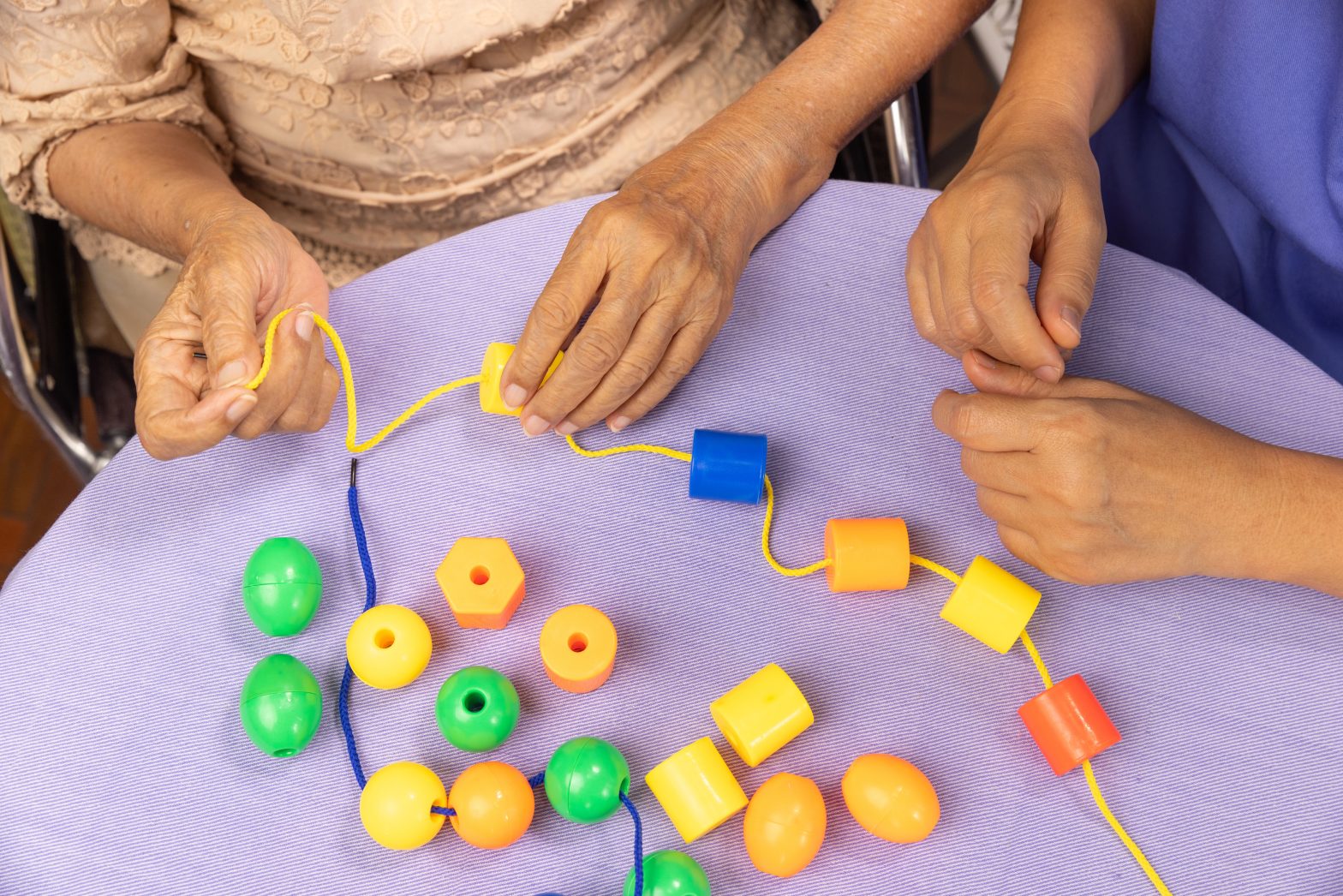
- Threading large objects
The goal is not the final result, but the repeated gesture.
Plant care
- Watering plants
- Removing dry leaves
- Repotting with assistance
This activity is calming and provides continuity over time.
Quiet activities
- Watching simple TV programs
- Familiar films or shows
- Nature or animal documentaries
It is best to keep the volume moderate and the lighting soft.
Presence and connection
Even without structured activities.
- Sitting nearby
- Holding hands
- Speaking in a calm voice
- Reading aloud
Shared silence can be just as meaningful.
Organizing the day at home
In the morning, more active tasks are preferable.
In the afternoon, calm and repetitive activities work best.
In the evening, maintaining relaxing routines is important.
Things to avoid
- Noisy or chaotic environments
- Overly complex activities
- Constant corrections
- Statements that contradict or diminish the person
Conclusion
At home, it is not necessary to provide constant entertainment. What matters most is offering presence, calm, and continuity. Even a few minutes of genuine attention can make a meaningful difference.